
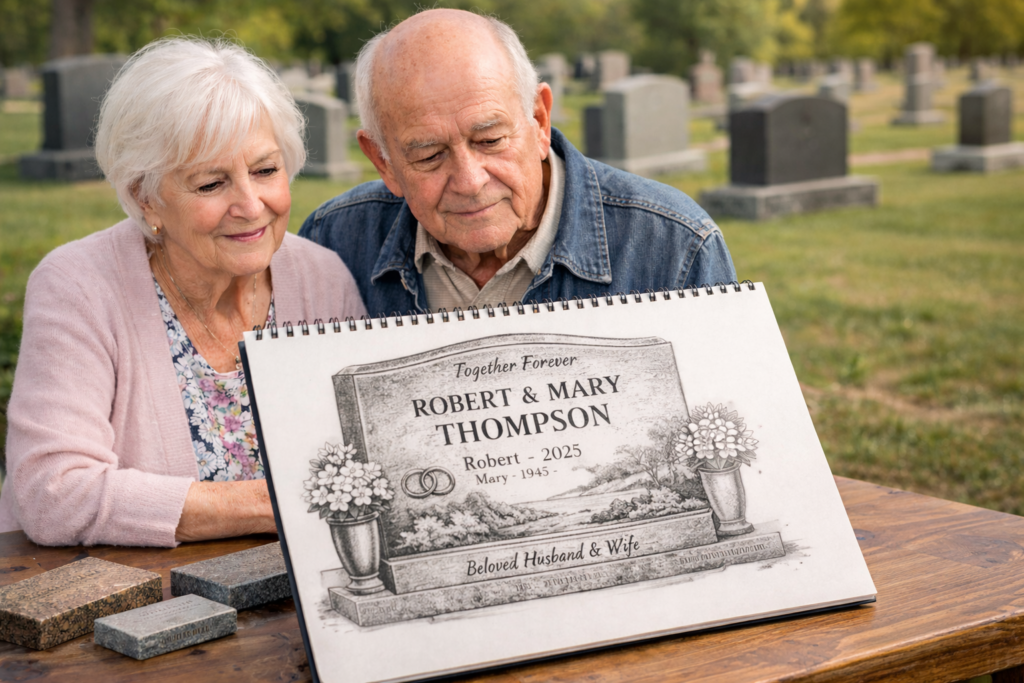
So, you are at that stage of life when you are starting to think about estate planning.
For most folks, this means assessing what you have and what is going to happen to it.
That’s important, for sure. I’d argue though, it’s just as important, if not more important to figure out what is going to happen to you when you die.
I don’t mean heaven or hell or consideration of the afterlife.
- Is there going to be a funeral?
- Where might that be?
- Will there be some sort of visitation or calling hours for my surviving family members to engage with others who share in the loss in some way?
- Will I be buried or cremated?
- Do I need some sort of cemetery property or will some “lucky” family member be charged with the keeping of my ashes on the mantle or worse, shoved in the back of a closet?
How will I be remembered? I don’t mean just in people’s hearts and minds.
- Will there be a place where family and friends could stop and reflect and remember?
- Will I have a monument, headstone or memorial of some kind to mark my coming and going?
- Is this important?
- Do I leave my family to wonder what I wanted or do I make it clear by making those decisions for myself?
Ordinary people and experts alike, agree that closure is a critical part of accepting the loss of a loved one. You may have heard of The Five Stages of Grief, as described by Elisabeth Kubler-Ross: Denial, Anger, Bargaining, Depression & Acceptance. I would say that closure is an important part of acceptance. What I’m getting at is this: having a tangible connection to the life of a deceased loved one provides real benefits including comfort, hope and finality.
That tangible connection is a memorial or monument, a gravestone or headstone if you will. People spend thousands of dollars on funeral services and caskets and cemetery property. But that last tangible connection, that thing that can actually be seen or touched FOREVER is often the last considered. The bond, from past to present to future is that memorial.
So, if you have not done so already, I encourage you to take some time to think about that last piece of the estate planning puzzle. Let us help you tell the story of your life. Ask yourself some basic questions. Do I want to make decisions about my legacy for myself, or do I leave that for others who might be persuaded to make these choices during one of the worst times in their lives, filled with grief, loss and emotion?
If you plan to end up in a cemetery (either buried or cremated) did you know that most grave spaces have rules and regulations about what kind of headstone or memorial can be placed on it? Not only do rules vary from cemetery to cemetery but they can also vary from section to section and different parts of the same section may not permit the same types of monuments and headstones.
My advice is to start with an expert in your town or community, an independent monument builder with a long-standing reputation. Someone that can help you navigate all of the decisions necessary to create a fitting tribute for yourself or a loved one.
Once you have an idea or ideas about your memorial, then verify that the rules governing the cemetery property you are considering will allow what you have selected.
Remember, that gravestone will likely be the only remaining tangible thing connecting future generations back to you. Give it the consideration it deserves.
Mike Johns, Sr. CM, AICA
- The Johns-Carabelli Co. Semerano Monuments & Flowers - Leaders in Award-Winning Design
- Monument Builders of North America – Past President
- American Institute of Commemorative Arts